Design systems
Blue Rewards
A scalable design system and UX patterns for BMO Blue Rewards, built for consistency across a loyalty experience.
- Design systems
- UI design
- UX design
A multi-faceted designer and engineer
I’m a product designer, front-end developer and creative generalist in Toronto, Canada. I’ve spent over ten years in design systems, graphic design, illustration and code, and I now design and build with or without AI agents.
Design systems, products and things I've made
Selected case studies in UX, UI and design systems for brands including BMO (Blue Rewards). I design scalable, consistent product experiences, connecting strategy, interaction and visual design with front-end know-how.
Design systems
A scalable design system and UX patterns for BMO Blue Rewards, built for consistency across a loyalty experience.
Airline UI design
UI design, illustration and prototyping for Porter Airlines, crafting a clear, distinctive digital experience.
Product design
A brand, mascots and a 50-card activity deck for babies, plus the React Native companion app I designed and built so parents can play along.
Web design & development
Websites designed and built end to end, from UX and UI through to responsive front-end development.
Creative generalist
Graphic design, illustration and code in one practice: side projects and experiments that show range beyond product work.
I'm Lee Travaglini, a Toronto designer who likes knowing how everything is made. Running a studio for over a decade taught me to learn by doing and to design with the build in mind.
While running my own studio, I spent over ten years creating websites, brand identities, illustration and interactive installations. I've also designed and produced a board game and a children's activity deck, produced music videos, and taught UX and UI design at George Brown College and RED Academy.
Having worked through several eras of web design, I bring solid design fundamentals and real front-end development experience to modern AI tools, which helps me explain clearly how a product should be designed and built. Away from the screen I'm usually building something else, like a working arcade cabinet, or out on a motorcycle or skateboard with music on. Wherever I am, I'm happiest when I'm making something.
Multi-disciplinary product designer
Designer focused on design systems and scalable digital products, with front end experience that helps bridge design and engineering.

May 2026 - Present
Toronto, Canada

June 2023 - May 2026
Toronto, Canada

January 2023 - June 2023
Toronto, Canada

April 2022 - January 2023
Toronto, Canada

October 2021 - December 2022
Toronto, Canada

Founded 2012
Toronto, Canada

Designing accessible, adaptive interfaces in Figma and Claude, with rapid prototyping and user testing to validate ideas early.

Building component libraries with Storybook documentation, usage guidelines and MCP markdown setups so designers, developers and LLMs share one source.

Mentoring designers and leading work across design, development and product, from UX consultation and client workshops to creative campaigns.

Building responsive, accessible front ends with HTML5, CSS3, JavaScript, React, React Native and WordPress, including CSS and SVG animation.

Creating branding, illustration and iconography with Photoshop and Illustrator, plus marketing collateral and social media design.

Leading teams to align vision, strategy and aesthetics across branding and marketing for clear, impactful visual communication.
Design systems
I built Atmosphere, the AIR MILES design system, from scratch. It then carried a full visual refresh, and when BMO acquired the program and AIR MILES became Blue Rewards, it carried a complete rebrand too. Atmosphere was in place within my first year, and when the rebrand arrived with a tight four-month window, it made the change possible. The system earned BMO's “Best of the Best” award.
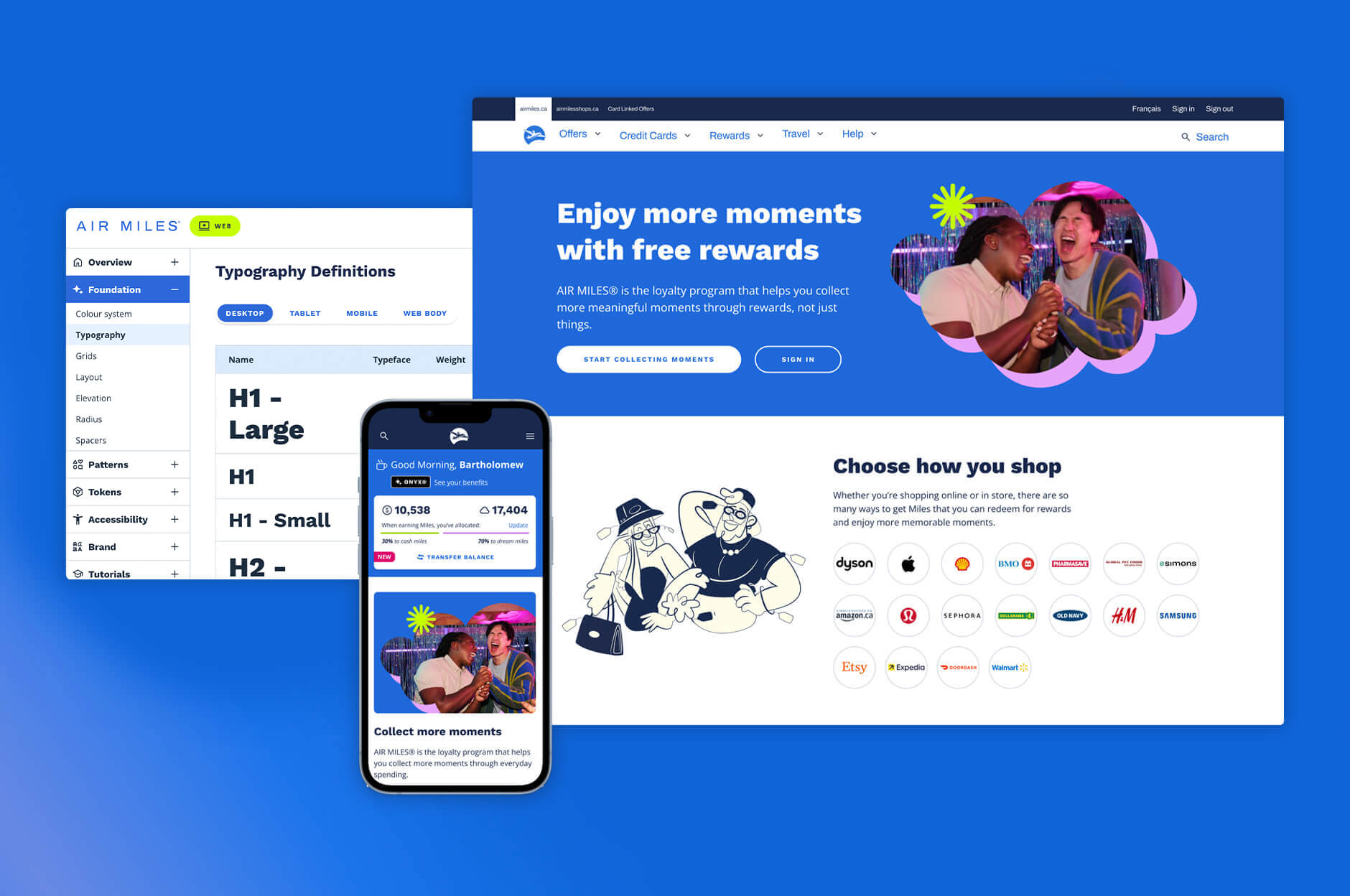
Built from scratch within my first year, with hundreds of primitive, semantic and component tokens mirroring the codebase.
A full move to Blue Rewards on a tight timeline, carried by tokens rather than rebuilt screens.
Atmosphere earned BMO's annual “Best of the Best” award in 2024.
AIR MILES ran many digital properties that needed to look and behave like one product, and to ship faster without piling up one-off designs. Then the brand kept moving: a refresh, followed by BMO's acquisition, a new name and a four-month window to rebrand.
As principal UI designer I led the interface design for Atmosphere, working with developers, product owners, analytics teams and marketers. I designed the components, styles and tokens, mapped them to the CMS with the development team, wrote the guidelines that made it usable, and designed and built the React documentation site that became the source of truth for designers, publishers and developers.
Build it right, refresh it, then rebrand it.
Established clear foundations, shared principles and a structured component architecture, so designers could work with confidence and consistency across every AIR MILES property.
Introduced fresh colours and new patterns by changing the foundations once, redefining CTAs, image treatments and decorative elements while preserving the brand's identity.
Because colour, typography, components and core styles were tokenized, the move to Blue Rewards was a system-led evolution instead of a rebuild.
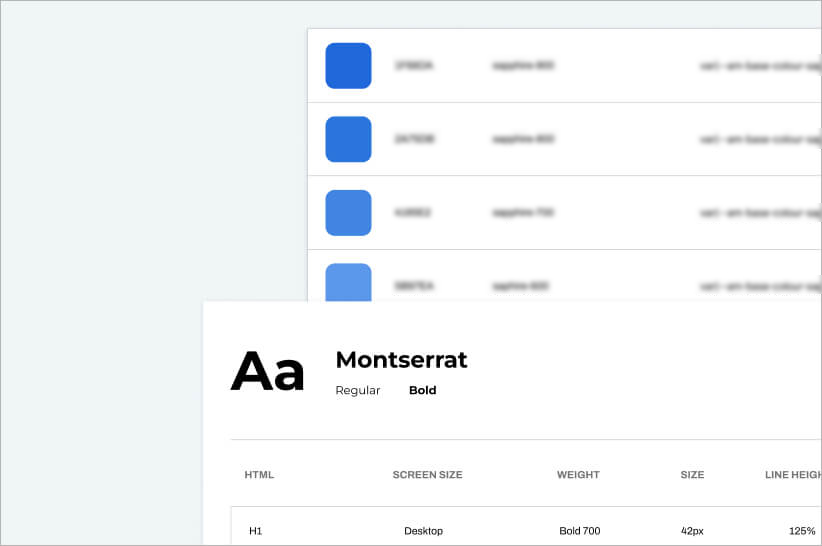
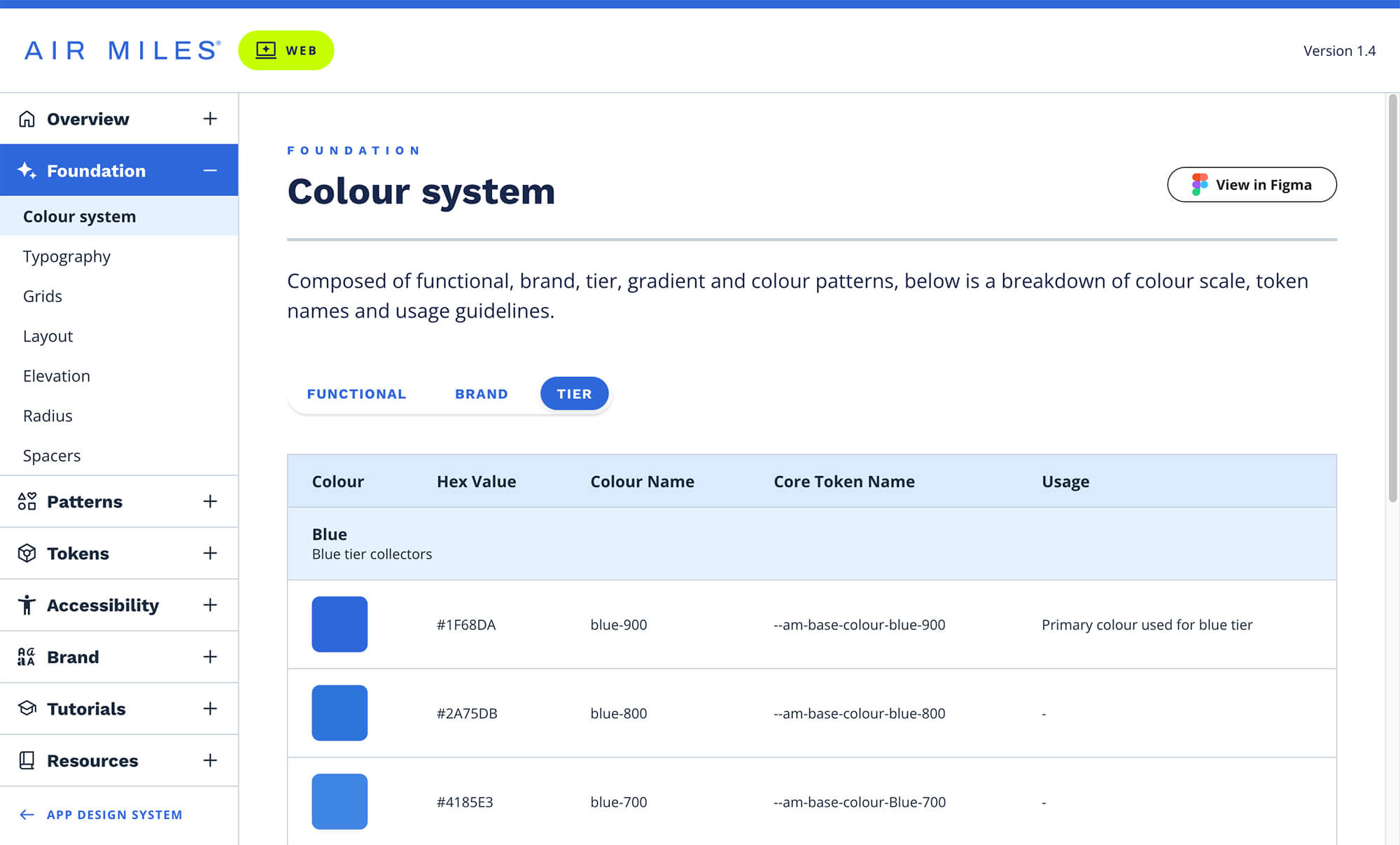
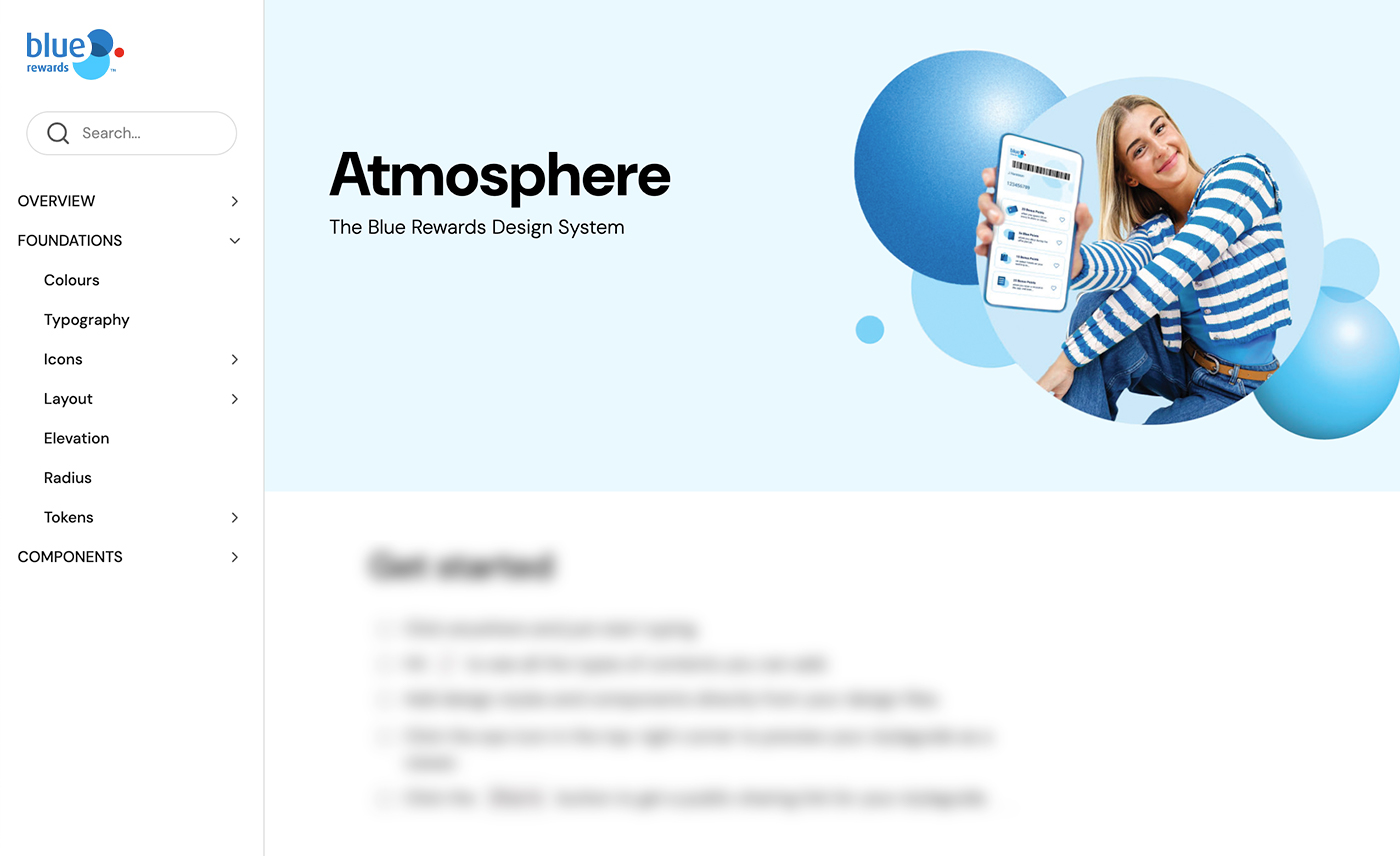
I designed and built a documentation microsite in React that serves as the source of truth for the whole system. Designers, publishers and developers all start there, with foundations like colour, typography, elevation and radius explained alongside the tokens and components that implement them. Alongside it sit three sets of guidance: publishing guidelines for CMS publishers, design guides for setting up files, and component usage guidelines. Aligning design, product and engineering around one reference let teams move faster and cut unnecessary rework.
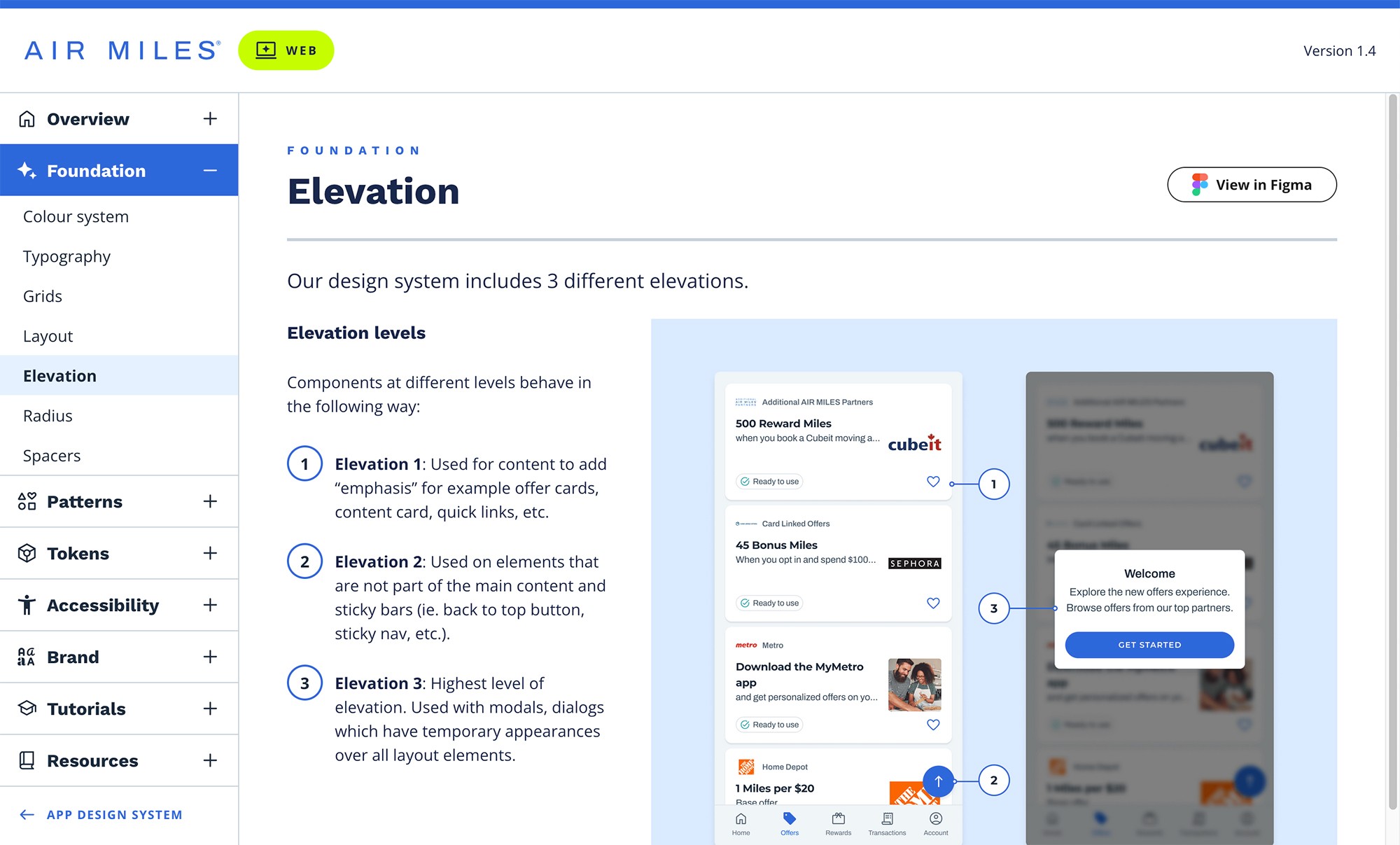
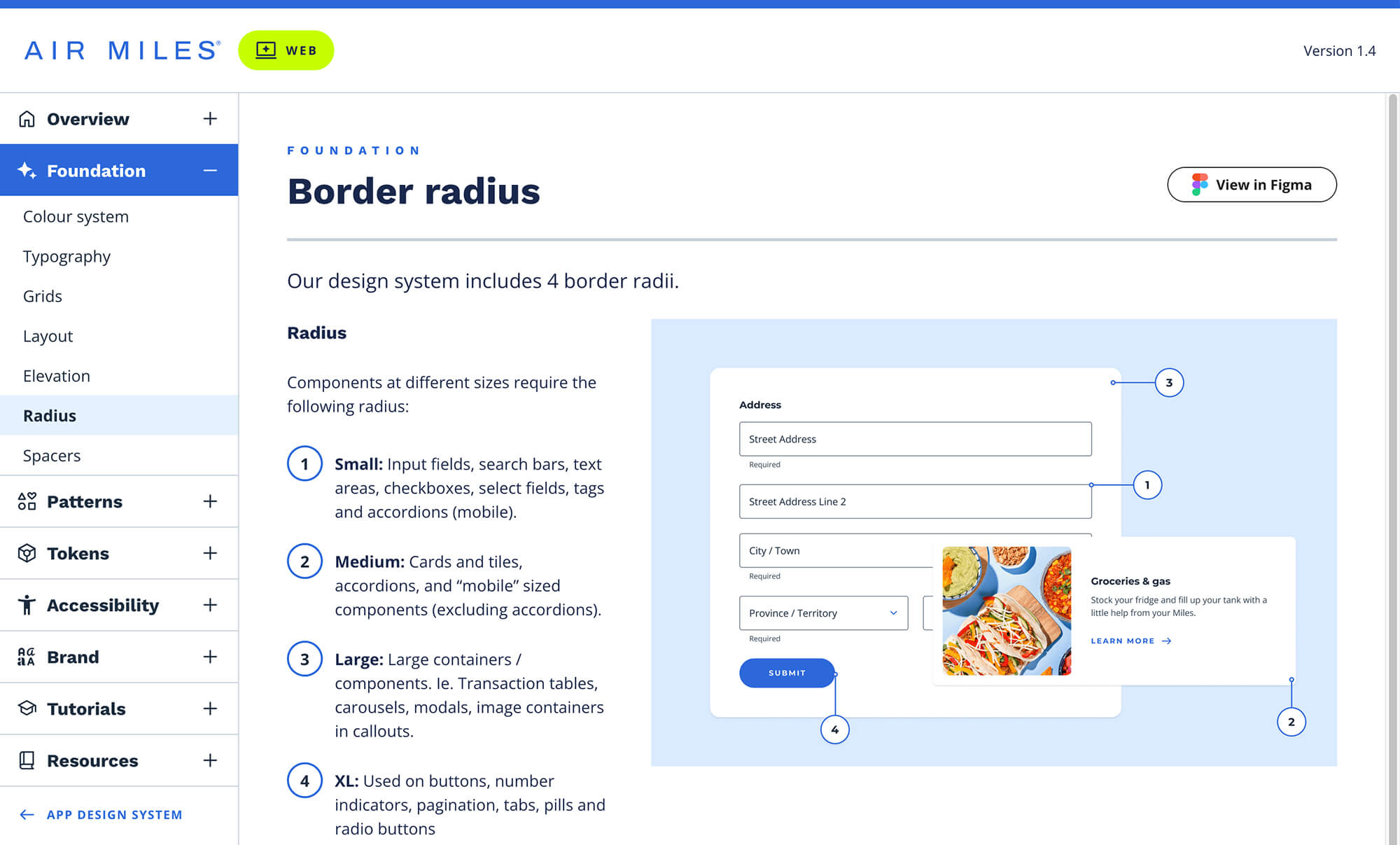
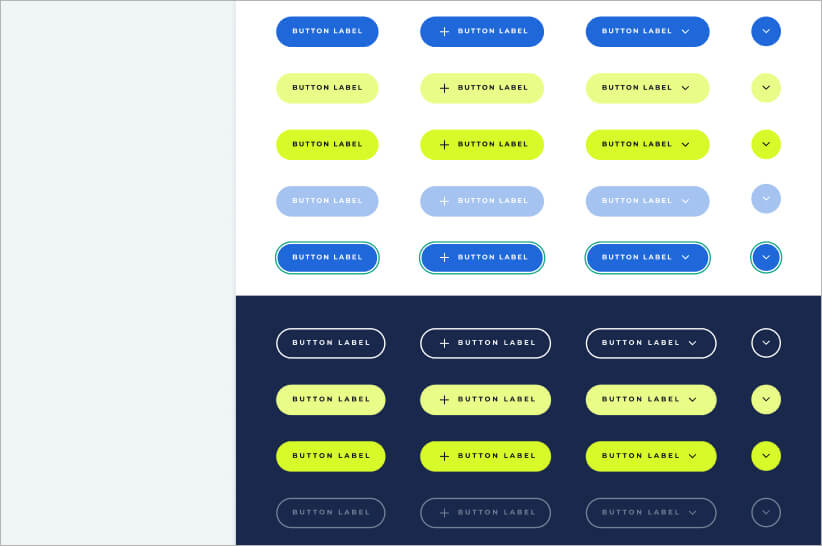
The library covers web and app: reusable, accessible components aligned with brand guidelines. On web, I worked closely with the development team to map each design component to its CMS counterpart. That kept our designs tied to core system components, while added configuration allowed custom functionality that improved the experience. Teams moved faster, one-off solutions dropped, and technical debt shrank steadily.
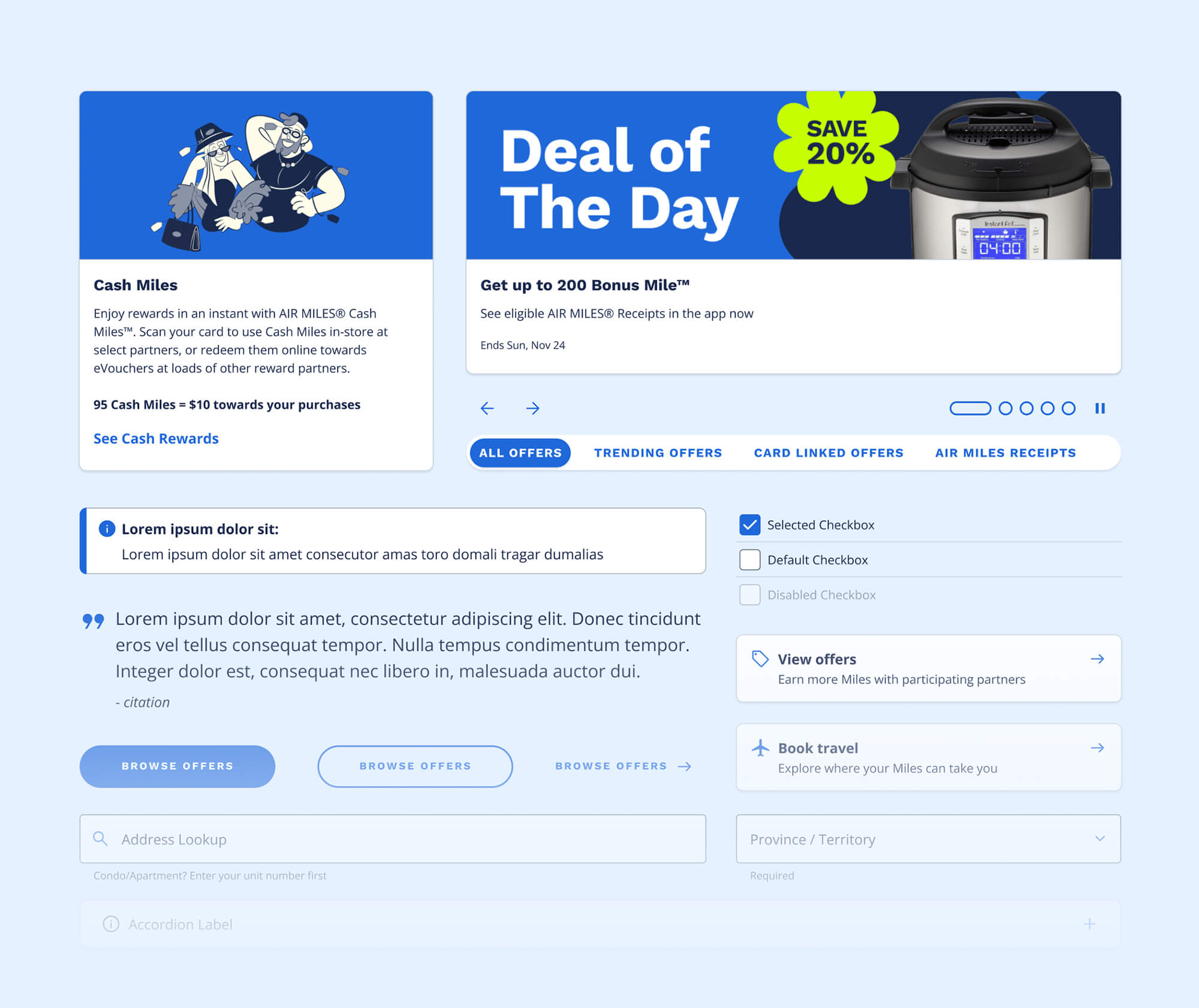
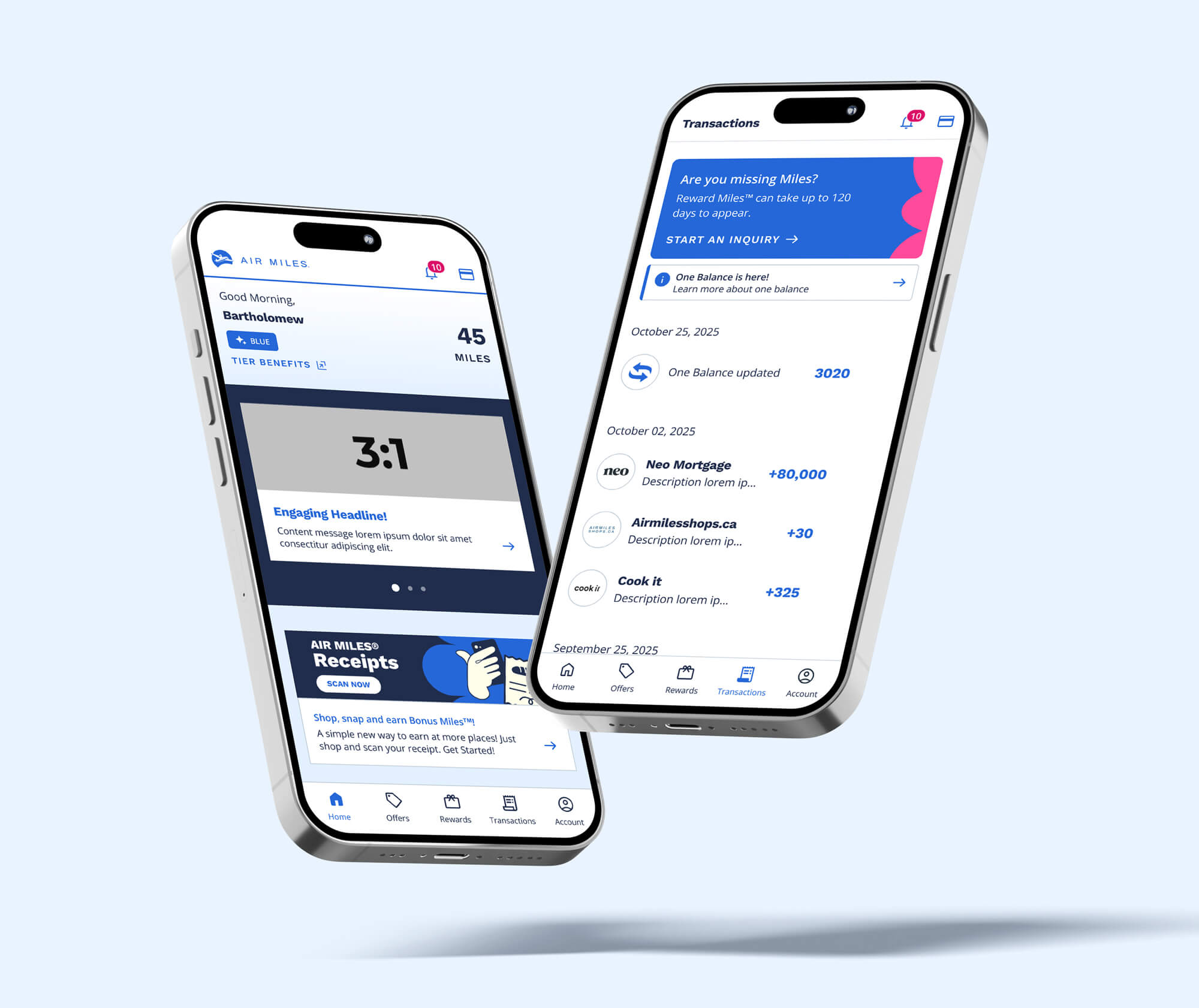
Components combine into layouts and patterns that publishers can assemble without a designer. From the member dashboard to campaign pages and reward banners, every page draws from the same parts, so new pages launch quickly and still feel like one product.
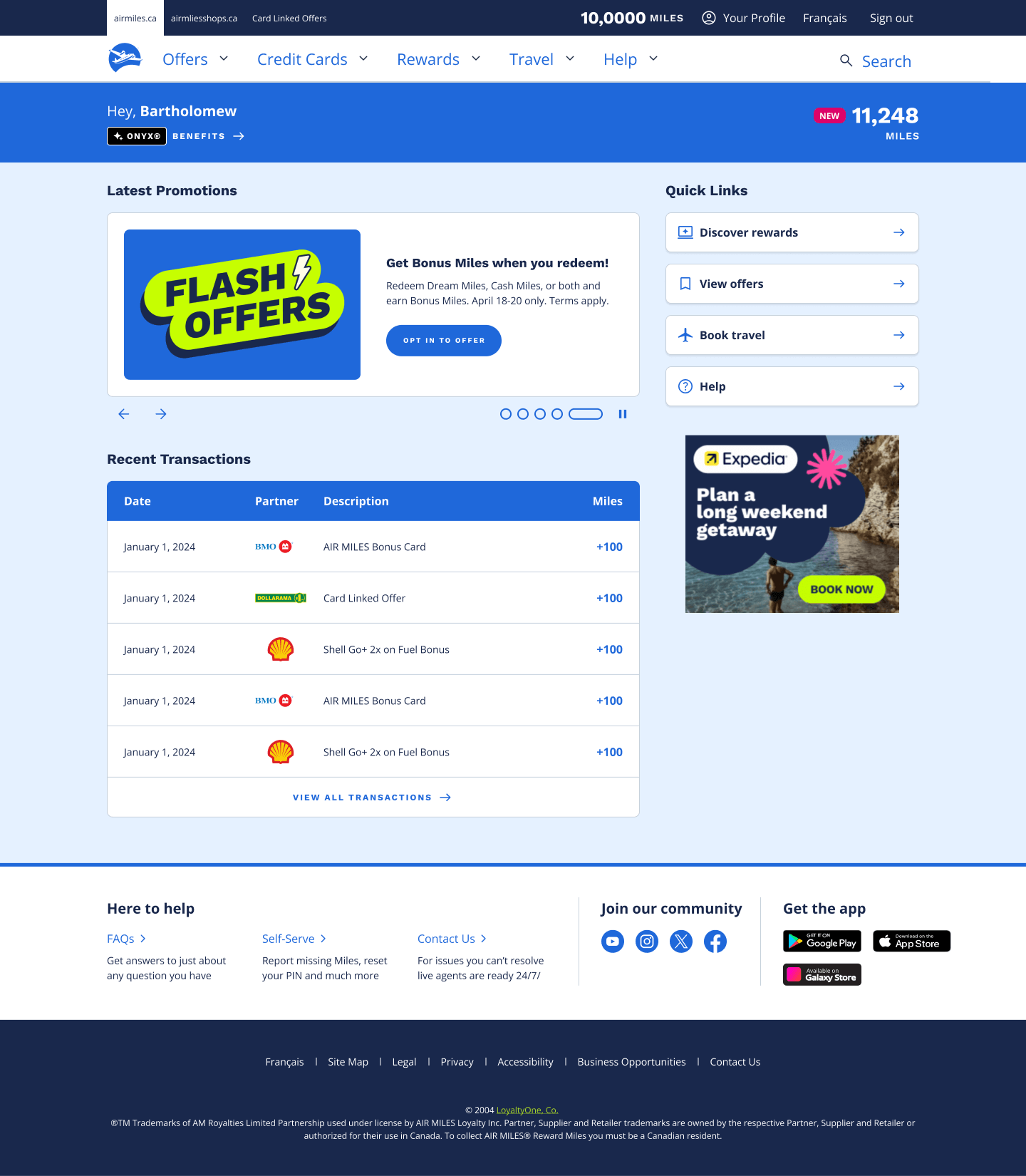
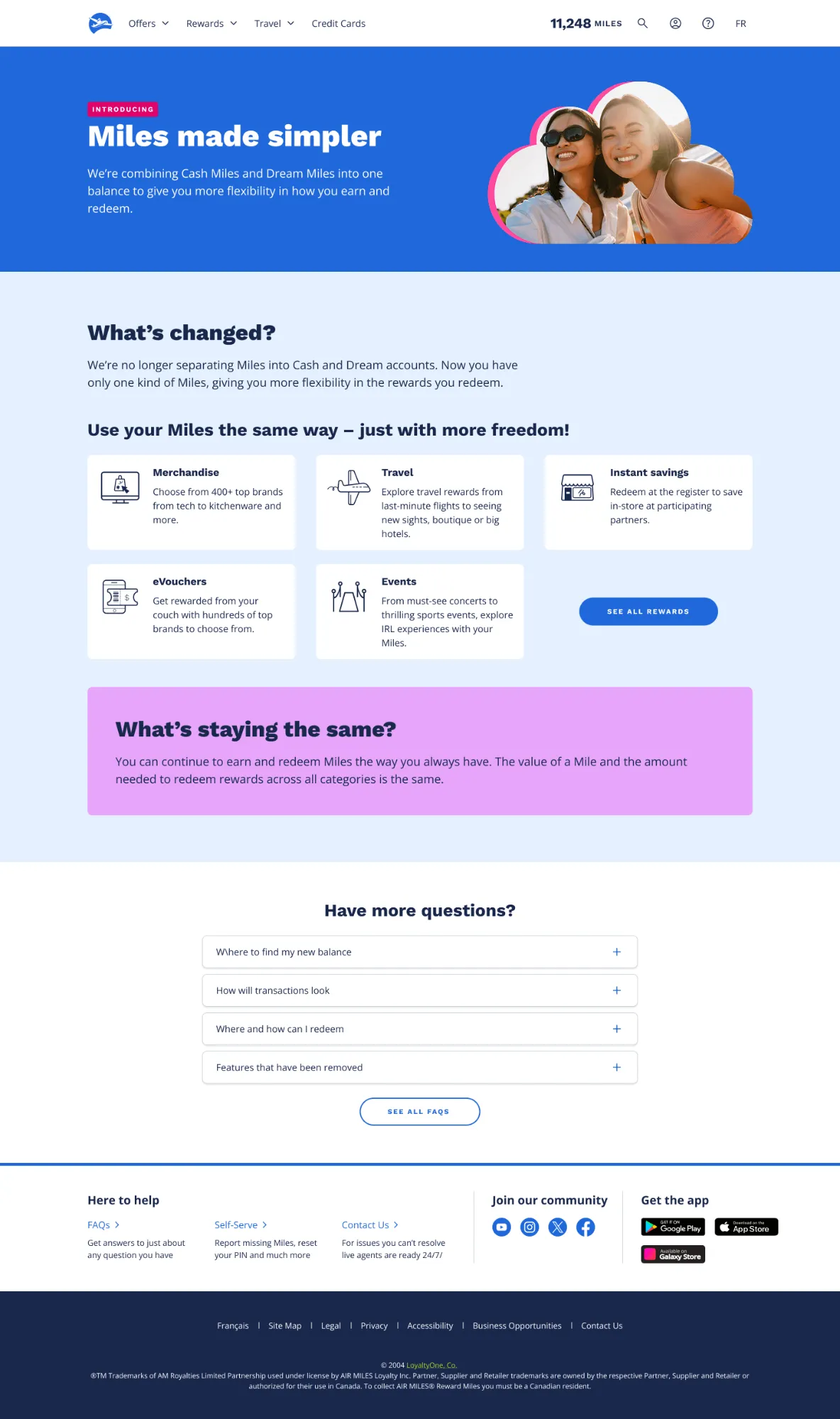
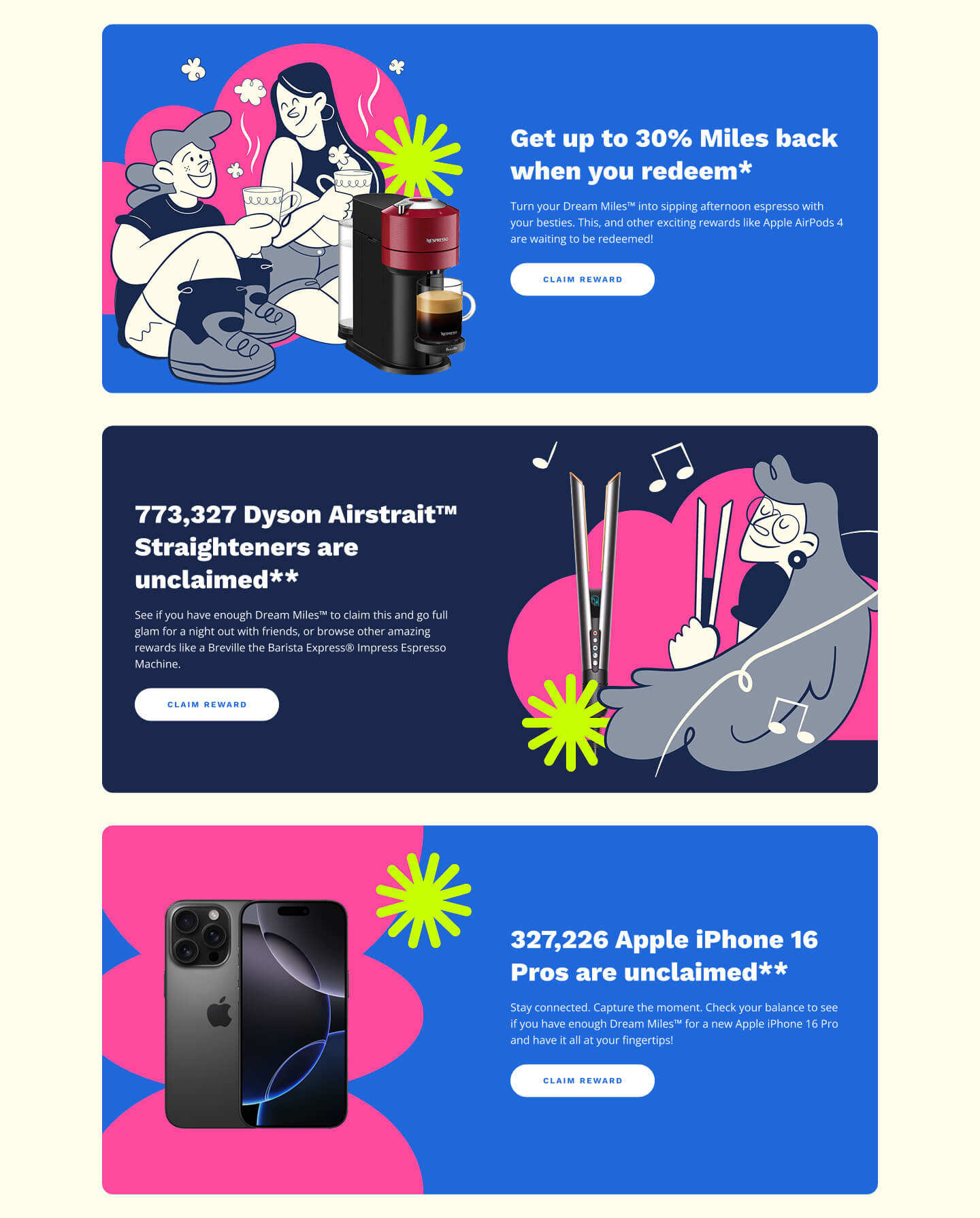
Illustration, colour and type come together in reward banners that can be reconfigured for any campaign, using the same few building blocks each time.
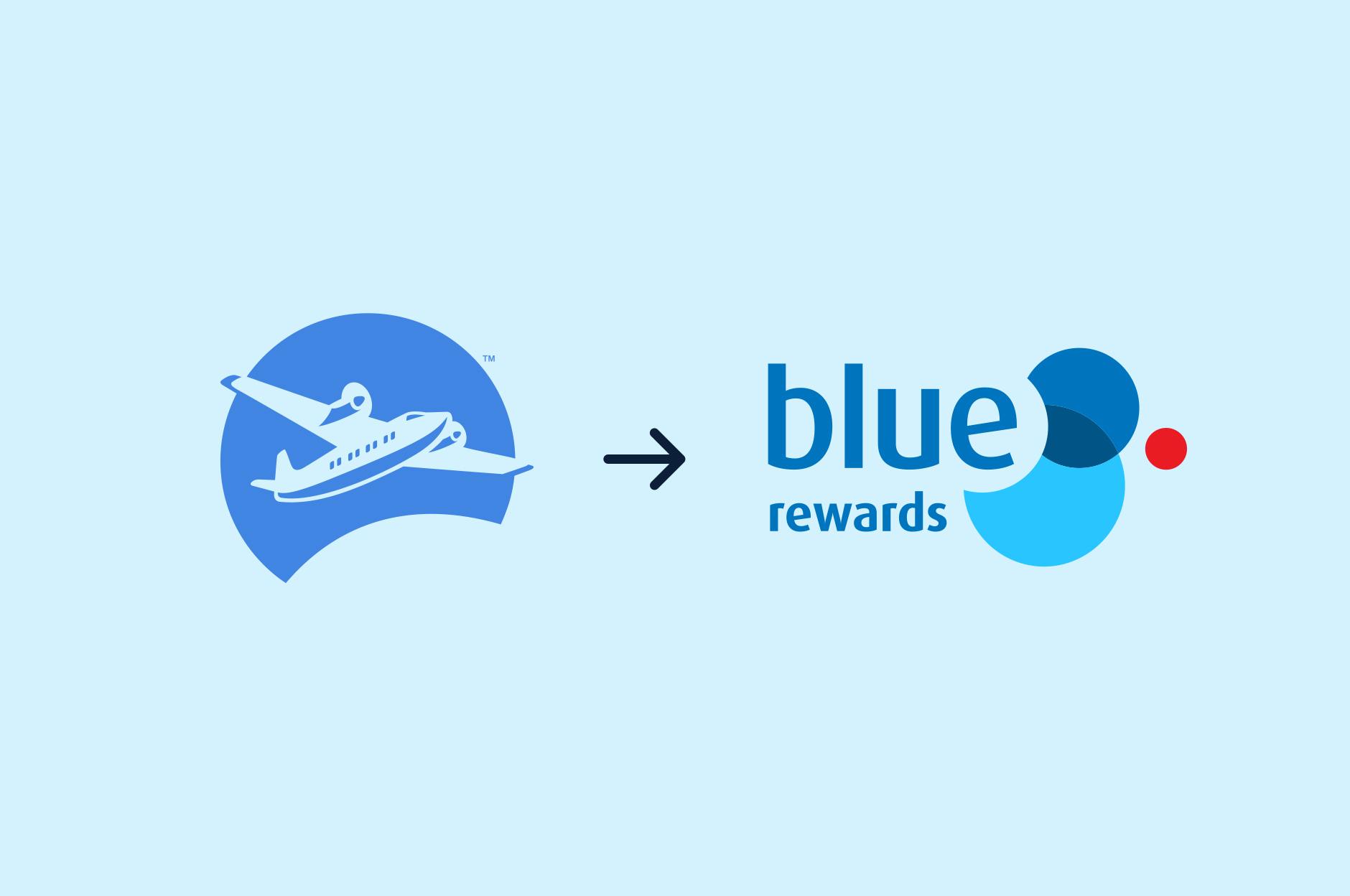
When AIR MILES became Blue Rewards, the strength of the system mattered most. Our colours, typography, components and core styles were all tokenized, so the brand evolution didn't mean rebuilding interfaces from the ground up. Changes made at the foundation cascaded through components in a controlled, predictable way. What could have been a large-scale overhaul became a system-led evolution that fit a four-month window. Teams outside the system, including the app, picked up Atmosphere's components and tokens to spearhead their own initiatives. I translated the guidelines for Blue Rewards too.
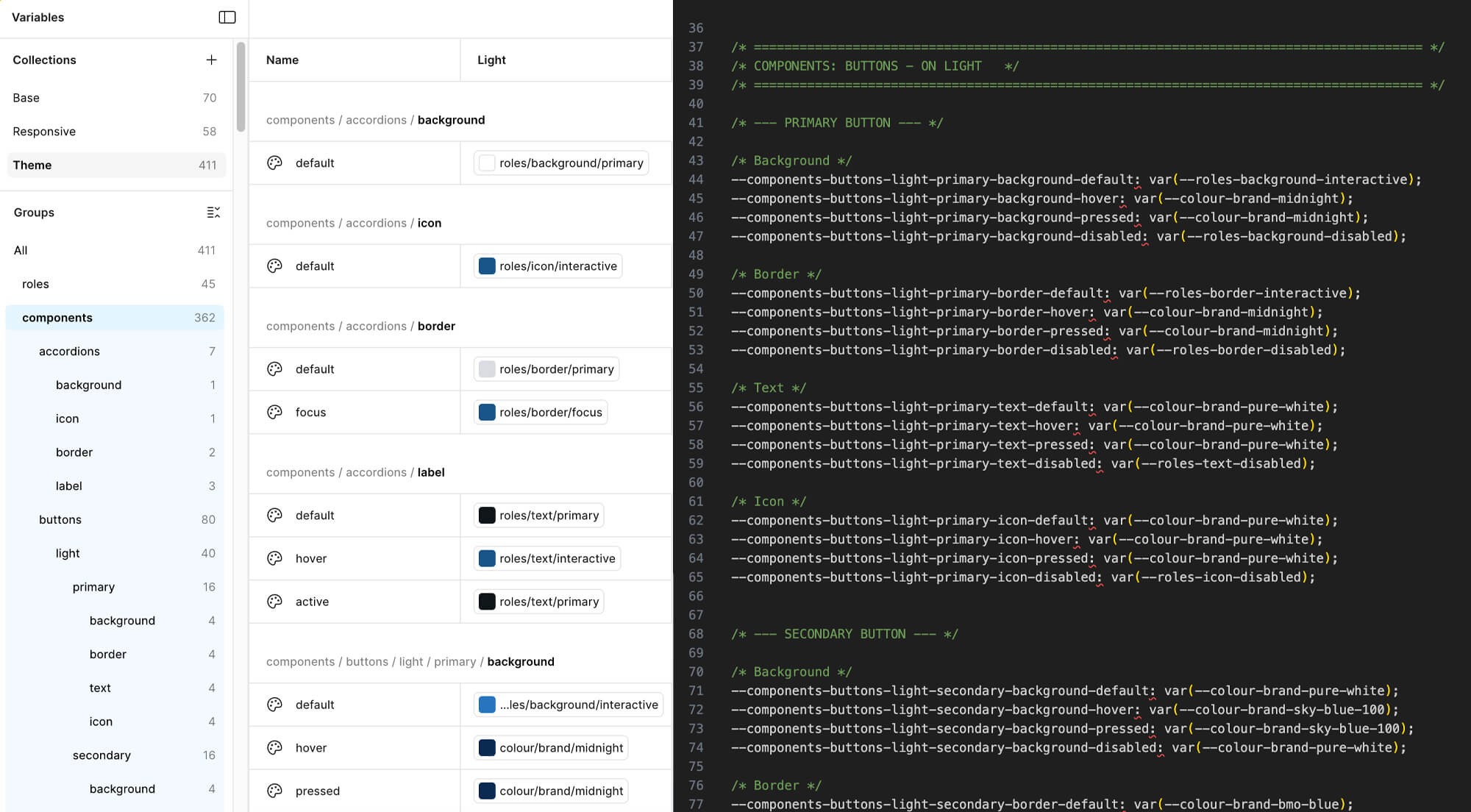
A layered token structure made the rebrand possible: Base holds the primitives, Responsive handles grids, typography and spacing, and Theme holds the semantic and component tokens, all mirrored in code as CSS variables. Swapping the theme re-skinned the components, from alerts and tabs to buttons and cards, without redesigning them.
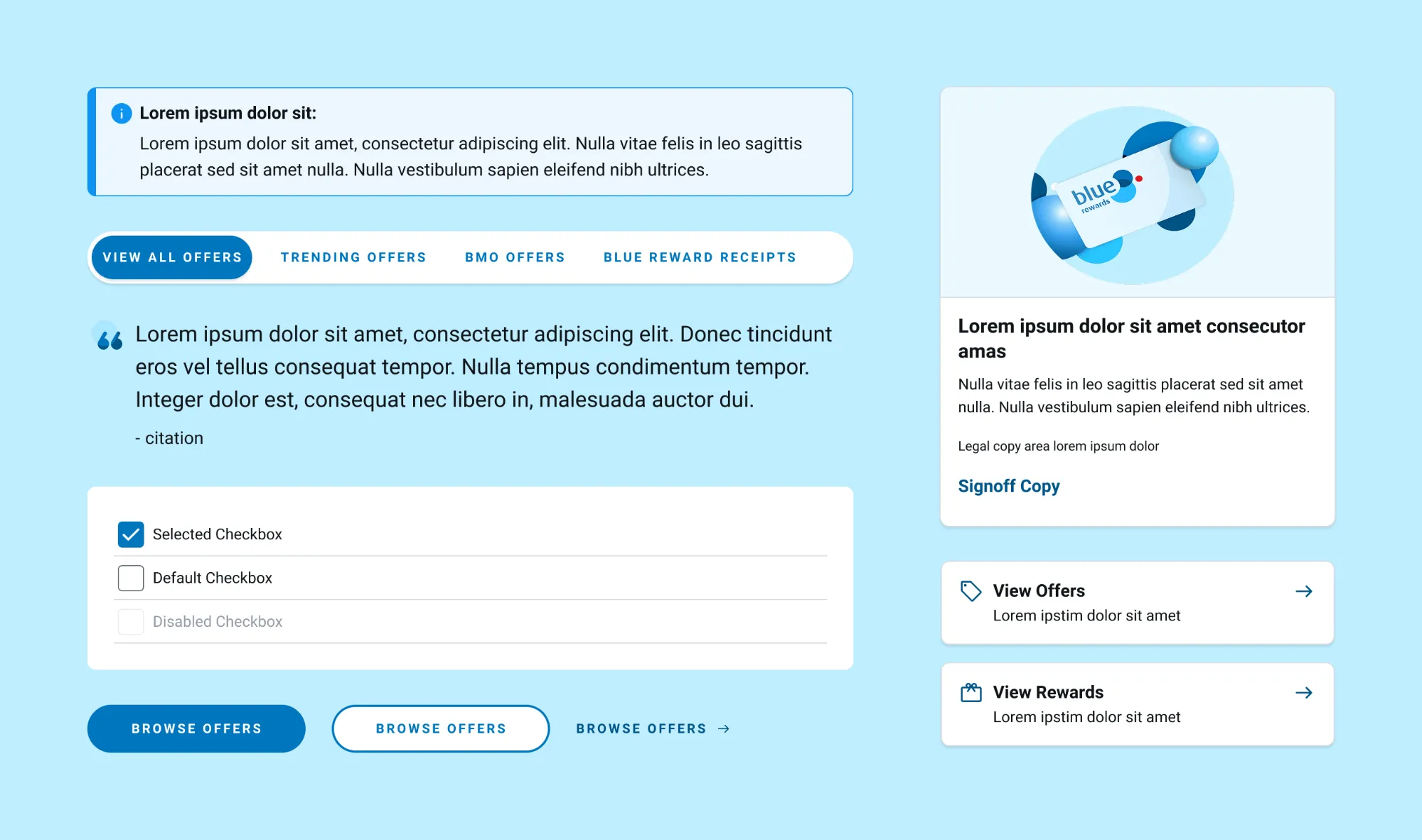
One design system, built in a year, carried AIR MILES through a refresh and a four-month rebrand to Blue Rewards, and earned BMO's “Best of the Best” award along the way.
Next case study